
The NO2 Camera in Brief
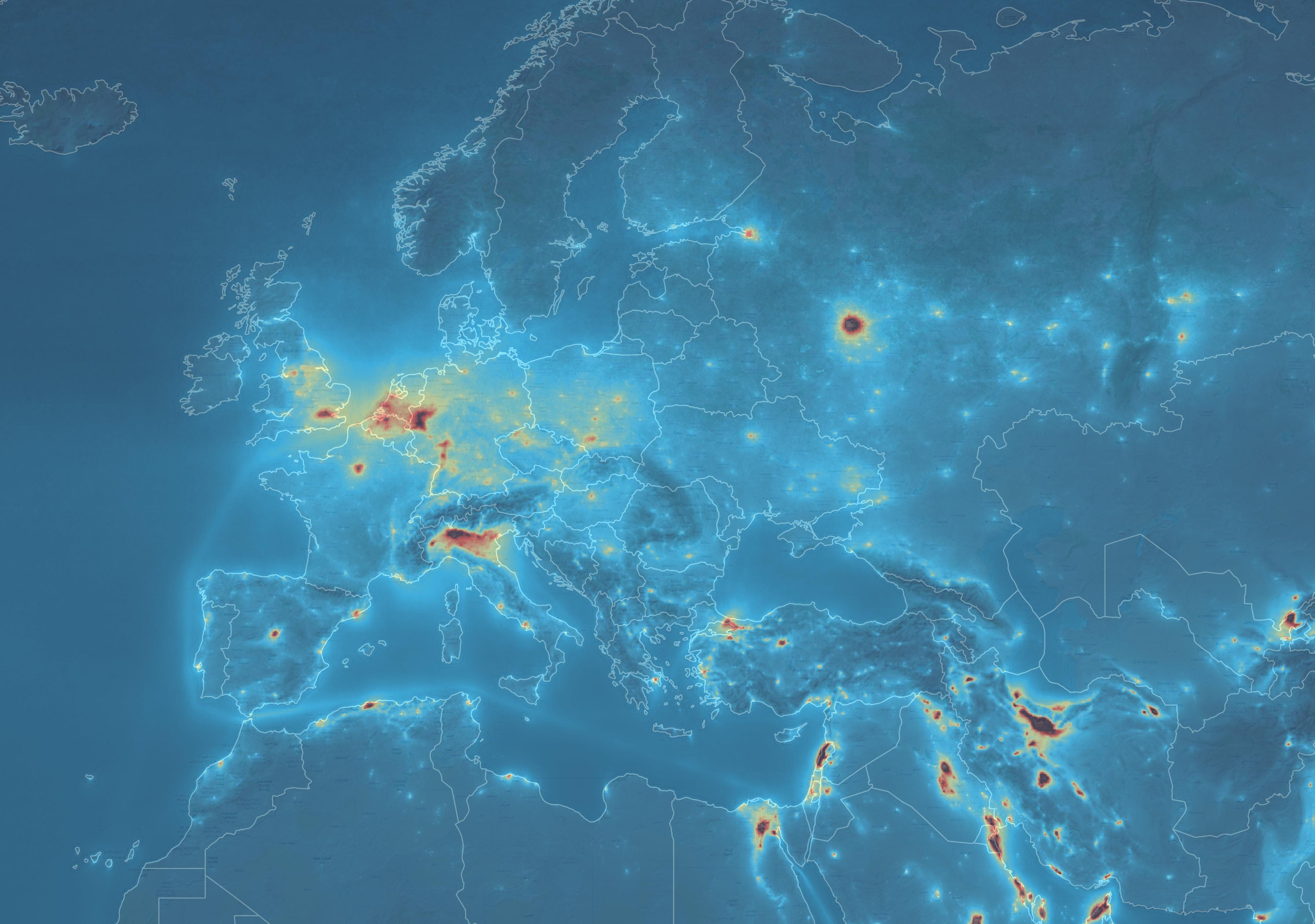
Nitrogen dioxide (NO₂) can be produced by lightning, but at the surface it is mostly of human origin due to the combustion of fossil fuels in engines and burners. Seen from space, enhanced surface NO₂ levels are clear tracers of human settlements, major roads and even shipping lanes (see image below). However, the spatial resolution of satellites is not sufficient to detect traffic jams on individual boulevards or to pinpoint local emitters that strongly affect air quality in their surroundings.
Born in the laboratory as a prototype of the ALTIUS instrument concept, the NO₂ camera quickly revealed its potential as an innovative tool for monitoring air pollution. It can capture regions with high NO₂ abundance in the plumes released by industrial stacks such as power plants or refineries, as well as over traffic congested parts of a city.
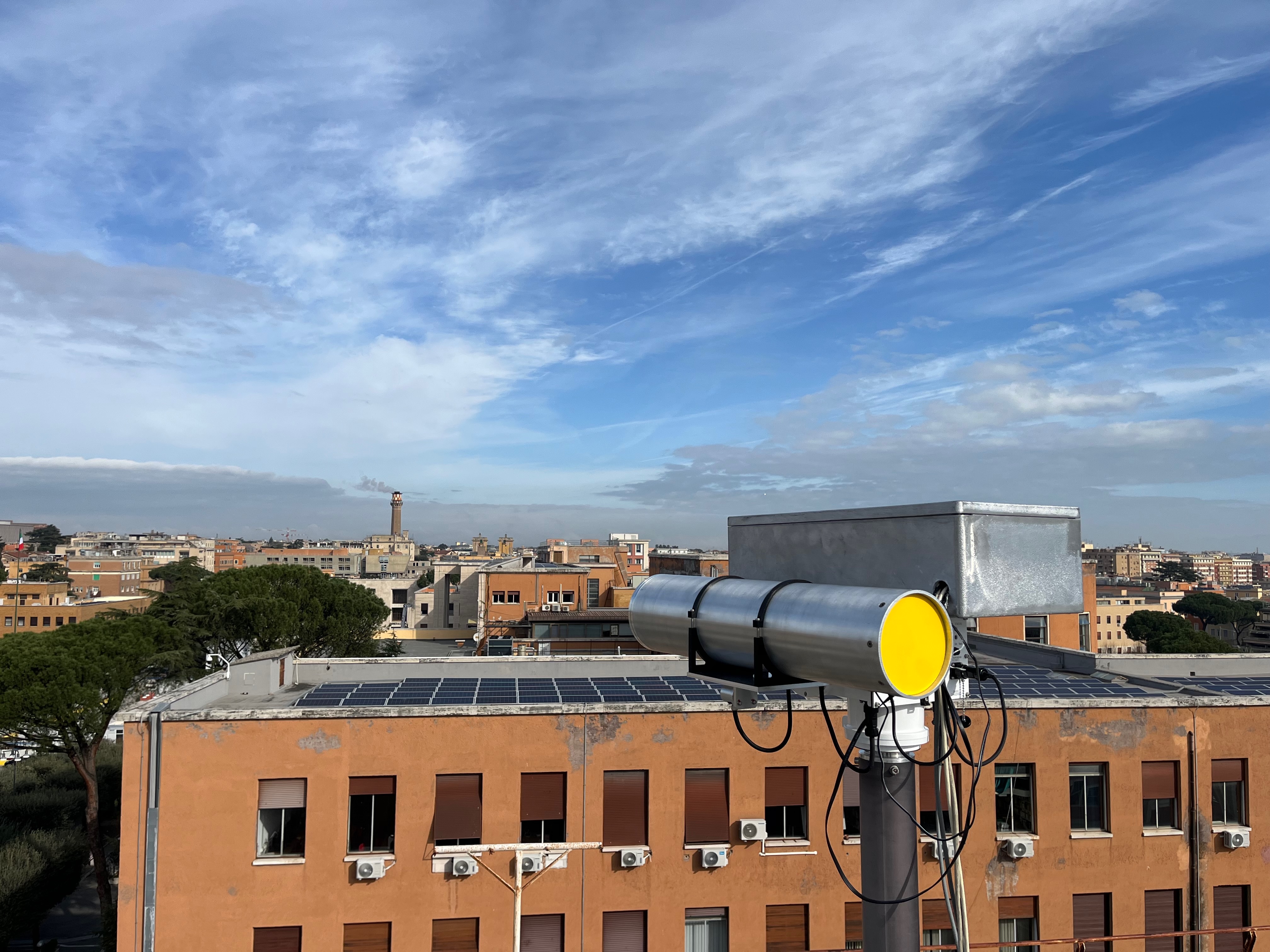
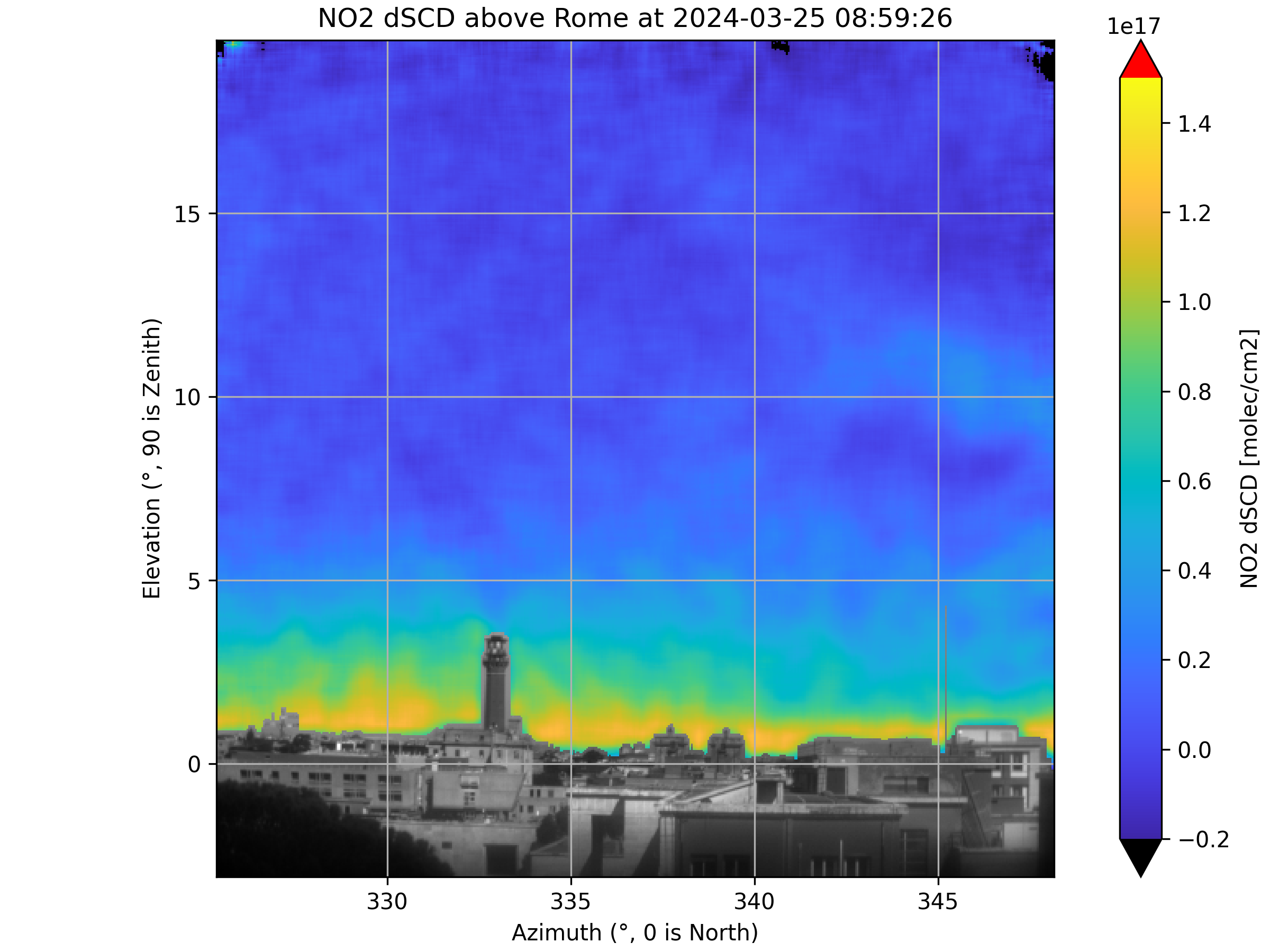
The NO₂ camera is, by design, an imaging instrument. Its snapshots reveal what our eyes cannot see but what our lungs are exposed to. So far, no other instrument has been able to image NO₂ with such detail. The data can provide information on emission fluxes from industrial stacks or highlight daily patterns within a city, for example the pollution peaks during rush hours. The images below show the instrument observing northward from the roof of the Faculty of Physics at Sapienza University, and the corresponding NO₂ field retrieved after processing.
The NO₂ camera remains a scientific instrument and a prototype. Our main objective is to improve the accuracy of its measurements through validation against other remote sensing spectrometers:
- Gramme, P., Busschots, C., Dekemper, E., Pieroux, D., Baker, N., Casadio, S., Iannarelli, A. M., Ferrante, N., Di Bernardino, A., Pettinari, P., Castelli, E., Di Liberto, L., & Cairo, F. (2025). Urban pollution monitoring with the AOTF-based NO2camera: validation with other DOAS instruments. Atmospheric Measurement Techniques, 18(21), 6021–6037. https://doi.org/10.5194/amt-18-6021-2025
To achieve this, our team continues to refine the instrument and takes part in international intercomparison campaigns such as the recent CINDI 3, and we have installed the NO₂ camera at the BAQUNIN urban supersite in Rome.
Read more about the ongoing PANACHE project here.
Further Reading
- Capturing the skies with the NO2 Camera (Annual report 2023-2024)
- Measuring street-level air pollution with the NO2 camera (News 2021-09-07)
- NO2 camera, a combination of remote sensing and imaging (Annual report 2021-2022)
- NO2 camera, a new and unique instrument (Annual Report 2017-2018)


